
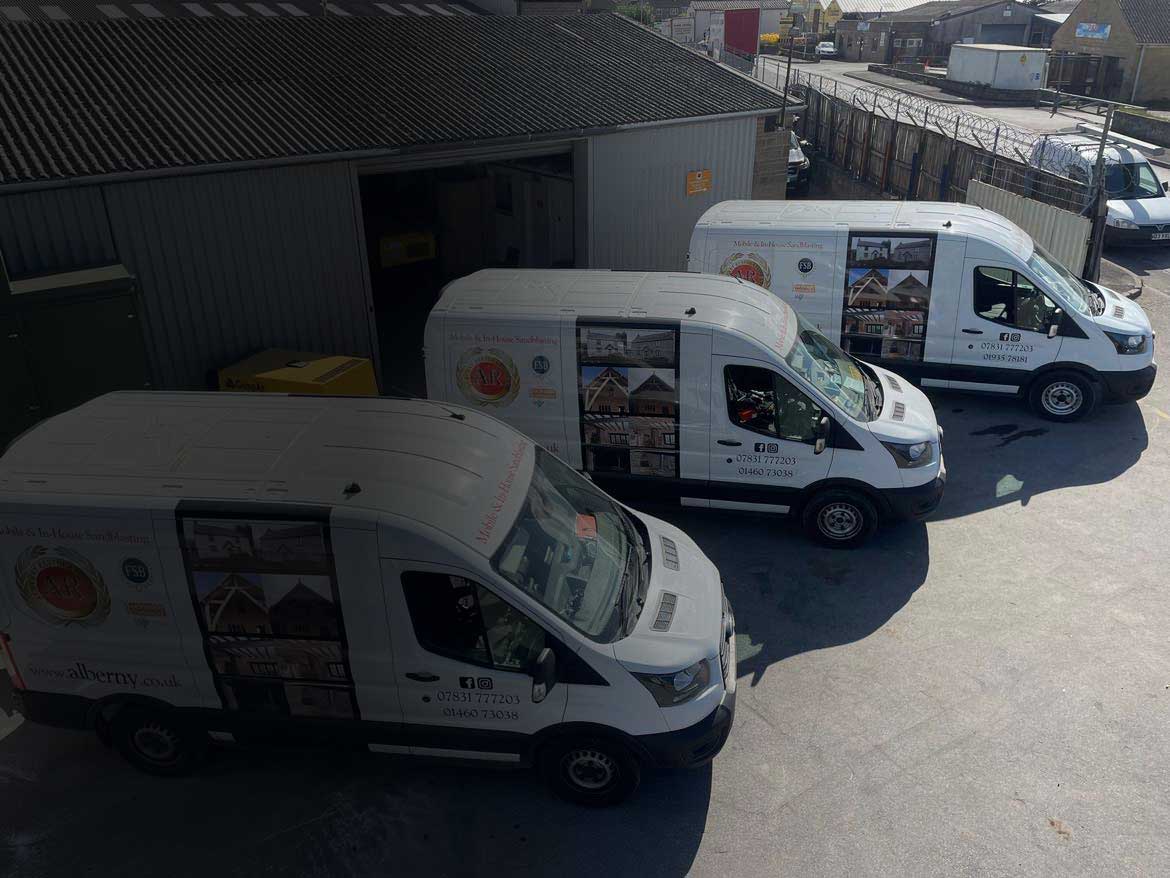
Dorset is full of metal worth saving. Victorian railings in Sherborne, cast iron fireplaces in Bridport cottages, farm machinery tucked in barns near Blandford, steel frames inside converted breweries in Dorchester. Most of it is not beyond help. Under the rust and the flaking paint there is usually sound metal waiting to be uncovered.
This guide explains how metal restoration works, what can realistically be saved and how to judge whether a piece should be blasted on site or brought into a workshop.
What metal restoration actually involves
Metal restoration is a three-stage job. First the surface is stripped back to bare metal. Then the condition of the metal underneath is assessed. Finally the piece is protected so the corrosion does not simply start again.
The stripping stage is where blast cleaning earns its keep. Compressed air propels an abrasive medium at the surface, lifting off paint, rust, scale and old coatings in a single pass. Chemical strippers struggle with layered paint and leave residue that interferes with new coatings. Wire brushing polishes rust rather than removing it. Blasting takes everything off and leaves a clean, slightly textured surface that primer grips properly.
The medium matters. Heavy structural steel can take a coarse grit. A delicate cast iron radiator cover or a bronze plaque needs something far gentler, because cast iron is brittle and thin sections can be damaged by an aggressive abrasive at the wrong pressure. Our [metal sandblasting and shot blasting service](https://alberny.co.uk/services/metal) matches the grit and the pressure to the item rather than running everything at the same setting.
Common Dorset metal restoration jobs
Gates, railings and estate ironwork
Coastal Dorset is hard on ironwork. Salt air accelerates corrosion, and decades of repainting over rust traps moisture against the metal. Blast cleaning removes every layer at once, exposing any sections that have corroded through and need welding before recoating.
Cast iron fireplaces, radiators and covers
Period cast iron often carries five or six coats of paint. Once stripped, the original detail in the casting reappears, and the piece can be left as bare metal with a protective finish, blackened, or primed and painted to suit the room.
Structural steel and RSJs
Barn conversions and commercial refurbishments across the county frequently need exposed steel cleaned and coated before the rest of the build progresses. Blast cleaning and priming on the same day means the steel is protected immediately and the site can move on.
Agricultural and vintage machinery
Tractors, ploughs, steam engine parts and trailer chassis all respond well to blasting. Because the process reaches into corners, weld seams and box sections that hand tools cannot touch, the preparation is far more thorough.
On site or in the workshop?
Anything fixed in place, such as railings, gates, structural frames and staircases, is handled on site by a mobile team with containment sheeting and extraction. Anything that can be lifted, moved or towed is usually better done indoors. Our [purpose built blast room](https://alberny.co.uk/services/blast-room) has extraction, a heavy load gantry system and forklift access, and it means the weather never delays a job. Collection and delivery can be arranged for larger items.
Why recoating on the same day matters
Bare steel begins to flash rust within hours in humid conditions, and Dorset is rarely short of humidity. A blasted surface left overnight can lose the clean profile that a primer needs. Same day priming locks in the quality of the preparation. Whatever finish comes later, whether that is a top coat, powder coating or a heat resistant paint, it will only last as long as the preparation underneath it.
Questions worth asking any contractor
– Which abrasive medium will be used and why that one for this metal?
– How will the surrounding area, garden or workspace be protected?
– Is any lead paint present, and how will it be contained and disposed of?
– Will the item be primed the same day, and with what?
– Are they fully insured, with method statements available on request?
A contractor who cannot answer those quickly is guessing, and guessing on a two hundred year old casting is expensive.
Book a free site visit
We have restored metal across Dorset from Sherborne to Weymouth and Shaftesbury to Bridport, for private owners, builders, heritage groups and main contractors. If you have ironwork, machinery or structural steel that needs stripping and protecting, [get in touch for a free quote or site visit](https://alberny.co.uk/contact-us). We will tell you honestly what can be saved and what cannot, and we will not be beaten on a like for like quote.

Leave A Comment